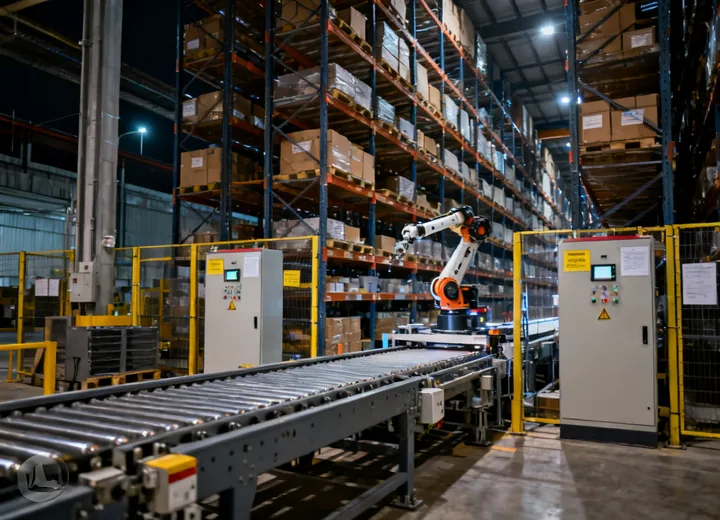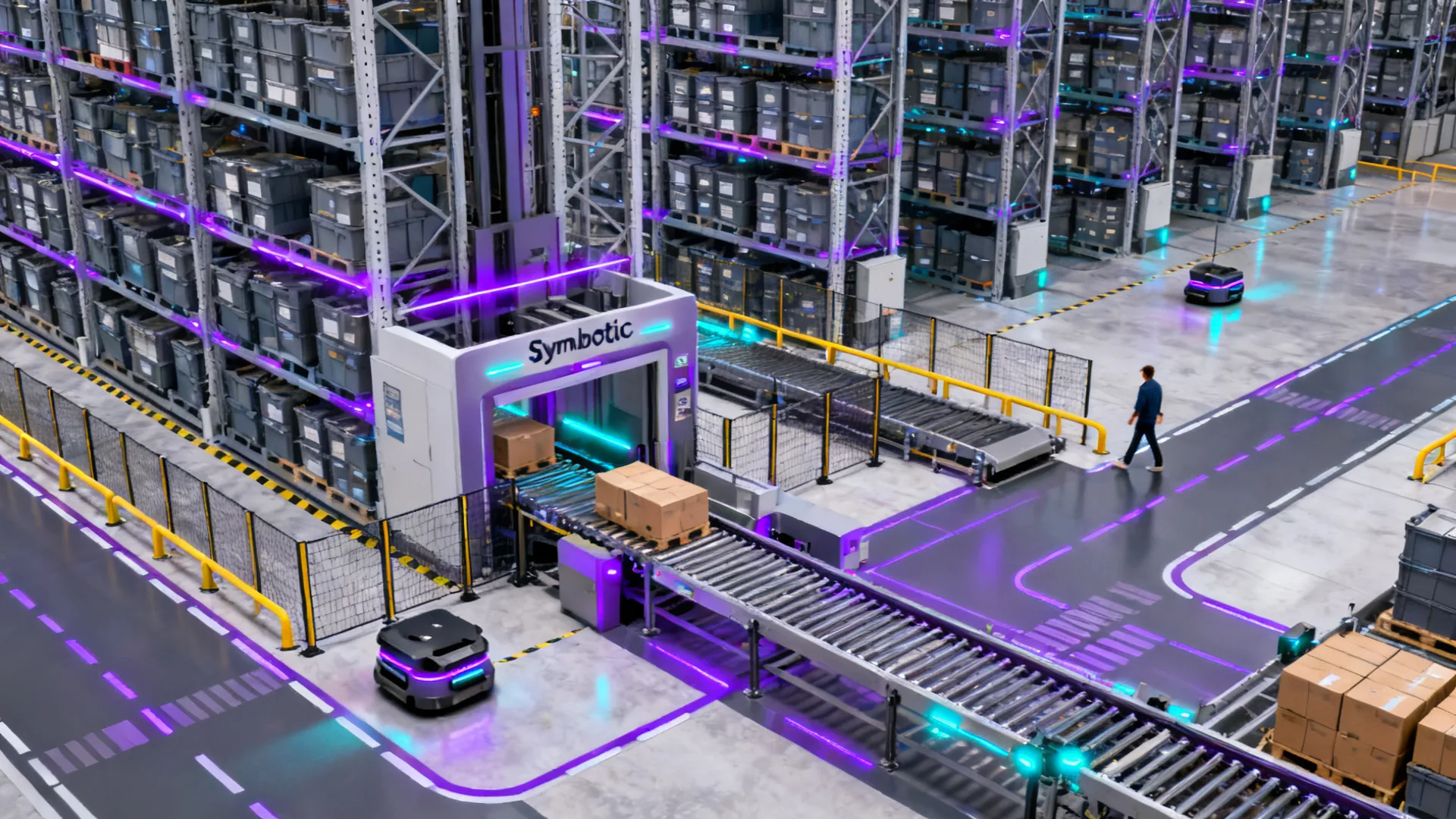
Dense storage AS/RS cell with robots and conveyor handoff
Dense storage · robotics · controls

Symbotic warehouse robots engineered around real peak demand

Balance inventory cube utilization, selectivity and recovery access with AMR missions, case handoffs and WCS timing that hold through the sustained shipping window—not a clean-run headline rate.

From assumptions to acceptance

Four engineering boundaries that keep automation decisions testable

Each workstream converts an operational concern into measurable inputs, interfaces and evidence that procurement, controls, maintenance and EHS teams can review together.

Dense storage selectivity and fire aisle review
01

Density engineering

Storage concepts start with SKU velocity, selectivity needs, rack load rating, beam deflection limits and expansion paths. Fire protection flexibility and technician recovery access remain visible so density gains do not erase maintainability.

  • Selectivity versus cube utilization trade-offs
  • Fire and maintenance aisle geometry
  • Expansion and re-slotting access
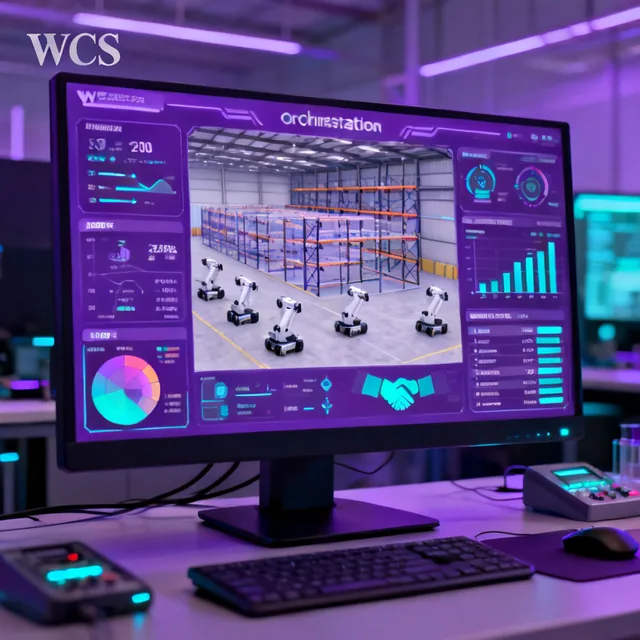
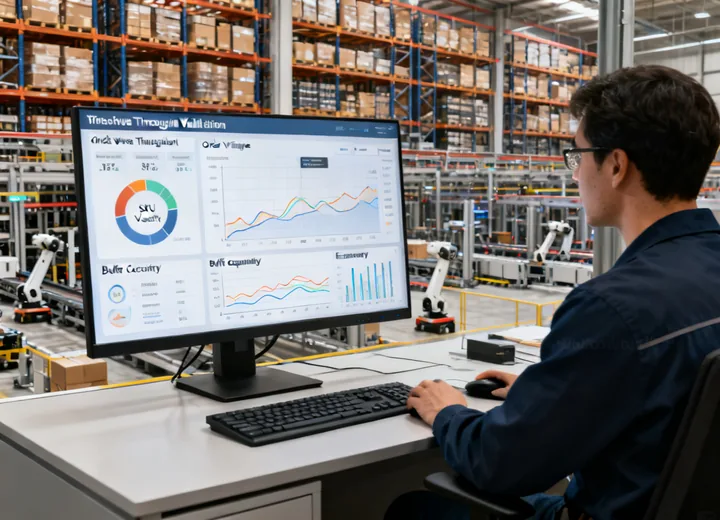
Throughput validation dashboard for warehouse peak window
02

Throughput validation

Pick rate and order lines per hour are tested with the stated order profile, replenishment demand, accumulation limits and peak duration. A ten-minute burst is treated differently from stable output across the operating window.

  • Order lines per hour with mix assumptions
  • Buffer occupancy under delayed divert or merge
  • Exception recovery and backlog clearance
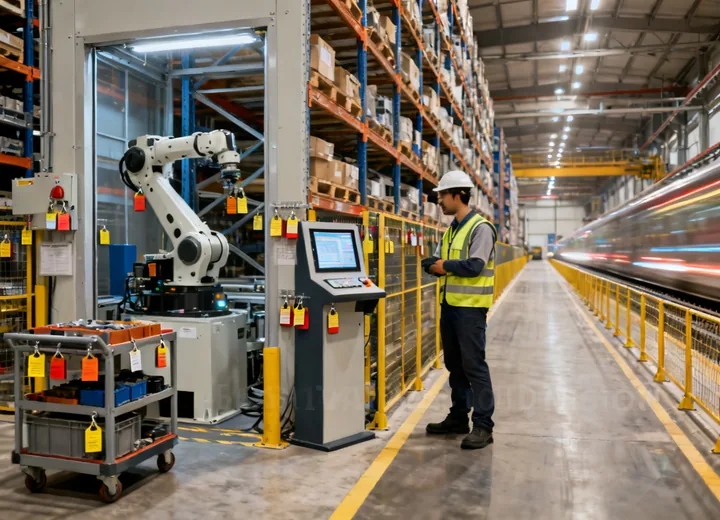
Warehouse robot serviceability and diagnostics bay
03

Lifecycle serviceability

Maintenance access, diagnostics, critical spares and recovery procedures are defined before operational handover. Mean time to repair is discussed with isolation rules, not as an abstract fleet average.

  • Guarded recovery access outside active scan fields
  • Critical spare consequence matrix
  • Restart authorization evidence
Brownfield warehouse automation staged cutover
04

Phased project delivery

Brownfield delivery protects live fulfillment with controlled cutover, fallback states and measurable acceptance gates. Existing material flow stays visible, including manual bypass and the point at which a new control layer assumes authority.

  • Staged commissioning by storage zone
  • Rollback triggers and production protection
  • FAT and SAT evidence by interface
Storage and warehouse robotics

Platforms viewed as parts of one material-flow system

Product selection connects physical load handling with aisle geometry, charging, interface timing and service access.

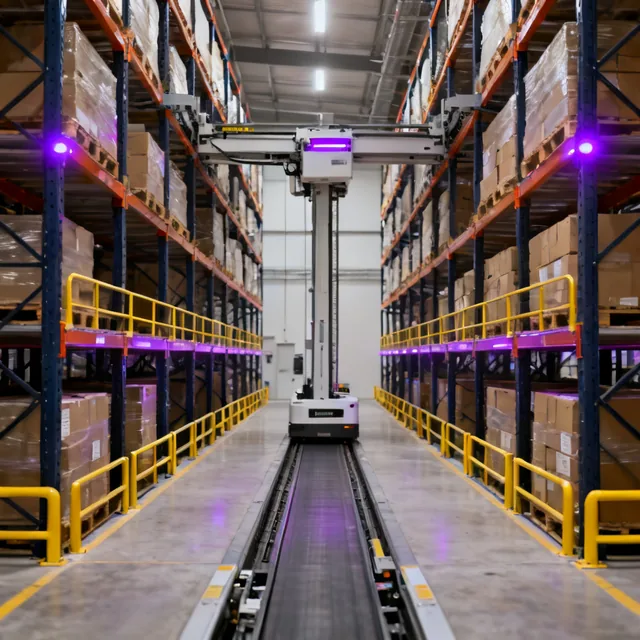
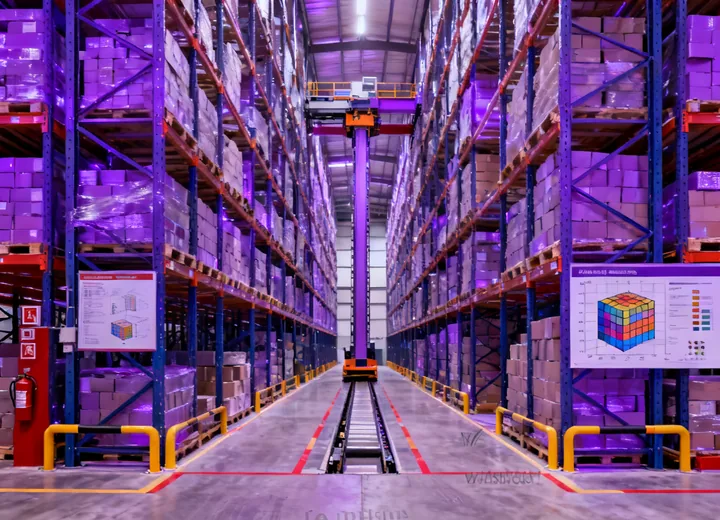
High-density AS/RS pallet storage aisle
Store

Dense storage & AS/RS

Cube utilization assessed against selectivity, fire aisles and recovery access.

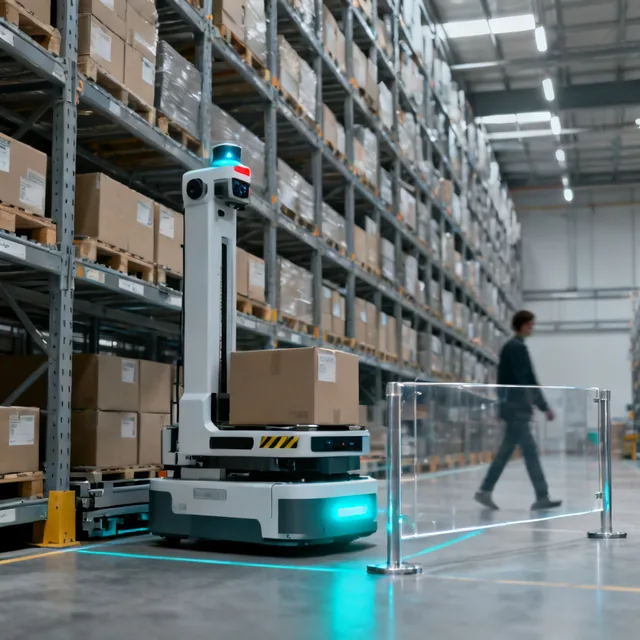
Case-handling warehouse robot at rack face
Move

Warehouse robots

Mission timing defined with traffic rules, payload geometry and queue limits.

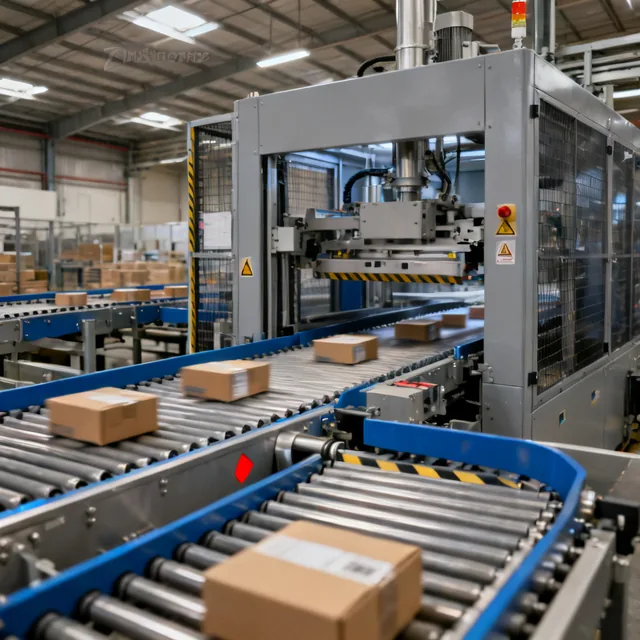
Conveyor sortation handoff to automation cell
Transfer

Convey & sort interfaces

Handshake states, merge logic and buffer occupancy kept visible in design.

WCS orchestration and fleet control station
Orchestrate

WCS & control layer

Release, routing and exception ownership mapped before interfaces freeze.

View the dynamic product catalog →
Design rateProfile-bound

Cases or order lines per hour tied to SKU mix, wave logic, replenishment and peak duration.

Scenario record →
FATInterface-bound

Command, confirmation, timeout, alarm and recovery states checked before site deployment.

Evidence path →
SATSite-bound

End-to-end flow checked with installed geometry, actual loads and agreed exception cases.

Acceptance path →
Service responseScope-bound

Coverage, response objective, remote access and critical spares defined in the project plan.

Set the boundary →
Different profiles, different constraints

Automation scenarios grounded in load, SKU and order models

Retail distribution

High SKU depth and compressed cutoff windows put case density, station balance and backlog recovery under scrutiny.

Grocery fulfillment

Temperature zones, store-order sequencing and mixed tote or case flows change travel and storage assumptions.

E-commerce peaks

Wave volatility stresses buffer occupancy, divert accuracy and exception recovery across the automation cell.

Manufacturing supply

Line-side delivery requires stable takt alignment, load identity and a defined response when a workcell cannot receive.

Cold-chain storage

Battery behavior, condensation, sensor performance and manual recovery access are considered at the stated temperature.

Brownfield DCs

Active production windows, floor quality and staged release plans shape the feasible automation sequence.

Compare operating profiles →
Start with the constraint set

Bring the storage and flow data that change the answer

A useful concept review starts with actual load units, SKU velocity and demand patterns. Share ranges where final figures are unavailable; assumptions can be marked for later validation.

Open the project brief

Initial data packet

  • Load dimensions, weight and center of gravity
  • SKU velocity and order-line distribution
  • Average, design and sustained peak window
  • WMS, WCS, WES, PLC and robot interfaces
  • Floor, aisle, fire route and maintenance constraints